If you have ever used ChatGPT for research papers and felt uneasy about whether a citation was real, that instinct was right. Whether ChatGPT can be trusted for academic work splits cleanly by task: it is still excellent at explaining concepts, drafting outlines, and polishing English, but it is not reliable when the job is to point you at a real paper. A general chatbot has no academic database of its own and does not retrieve real sources before it answers, so it can generate references that look correct and do not exist. That single gap is why so many researchers go looking for a ChatGPT alternative for research, and it is the gap this comparison is built around.
Our top pick is Kenkyu.ai, because it closes exactly the weakness that drives people away from ChatGPT. It searches more than 200 million papers across languages, translates any of them into your native language, and answers with citations you can trace to the exact source paragraph. Where ChatGPT competes on fluency, Kenkyu.ai competes on traceability, and it bundles search, reading, and translation into one place rather than three. If you mainly want a chatbot to brainstorm or draft, keeping ChatGPT makes sense. If you need sources you can stand behind, start below.
All nine tools were scored 0 to 5 on the same 13-point rubric, grounded in documented features, official pricing, and real user sentiment rather than marketing copy. Higher is better. For a wider view of the category, see our guide to the best AI academic research tools.
At a glance: ChatGPT research alternatives compared
Scores are 0 to 5 (higher is better). Citation trust is our shorthand for citation integrity: whether a claim traces to a real, correctly linked source. ChatGPT sits last as the baseline you are measuring against.
| Rank | Tool | Search | Q&A | Citation trust | Translation | Value | Price (USD) | Best for |
|---|---|---|---|---|---|---|---|---|
| Editor's pick | Kenkyu.ai | 3 | 3 | 4 | 4 | 4 | Free; Plus ~$8/mo | Searching, reading, and translating across languages in one place |
| 2 | SciSpace | 3 | 4 | 3 | 2 | 3 | Free; Premium $12/mo | Reading and decoding a single PDF |
| 3 | NotebookLM | 0 | 4 | 5 | 1 | 4 | Free; Plus ~$8/mo | Synthesizing and studying your own uploads |
| 4 | Paperguide | 3 | 3 | 3 | 0 | 5 | Free; Plus $12/mo | One affordable tool from discovery to writing |
| 5 | Anara | 2 | 4 | 4 | 1 | 3 | Free; Plus ~$10/mo | Cited chat across your own document library |
| 6 | Elicit | 3 | 3 | 5 | 0 | 3 | Free; Plus ~$10/mo | Systematic reviews and data extraction |
| 7 | Perplexity | 4 | 3 | 3 | 0 | 4 | Free; Pro $20/mo | Fast cited answers on current, open-web topics |
| 8 | Consensus | 4 | 4 | 4 | 0 | 4 | Free; Pro $10/mo | Evidence-based yes or no questions |
| 9 | ChatGPT (baseline) | 2 | 4 | 1 | 2 | 3 | Free; Go ~$8/mo | Explaining, outlining, editing, and general use |
The one-line verdict on Kenkyu.ai: multilingual search across 200M+ papers, native-language translation, and answers you can trace back to the source paragraph, all in one tool with a free plan that needs no credit card.
What is ChatGPT for research?
ChatGPT for research means using OpenAI's general-purpose AI assistant to help with reading and writing about papers. It was never built as an academic tool, but researchers reach for it constantly to explain a dense concept, sketch the structure of a literature review, edit prose (especially for non-native English speakers), and, on paid tiers, pull together long syntheses through Deep Research. Its biggest advantage is simple: most people already have it open.
Its strengths are worth stating plainly, because the case against using it for sourcing is stronger when it is fair. Reviewers single out Deep Research repeatedly, with one calling it "the best deep research on the market so far," ahead of Perplexity, Gemini, and Mistral on completeness. It is genuinely good at brainstorming, outlining, and editing, and it is flexible across coding and everyday tasks in a way no specialist here matches. A physics PhD on r/PhD pushed back on the skeptics directly: writing it off as worthless, they argued, is "luddite behavior," given how much it accelerates the right kinds of work. ChatGPT earns its place as the default tool people already hold.
The trouble starts when a paper has to be real. ChatGPT has no native academic-paper index, and by default it does not ground its answers in retrieved sources, so it produces references that read like real citations but lead nowhere. That is why this ranking weights citation integrity, our shorthand for source transparency, as heavily as search and conversational quality. The next section puts numbers on how large that gap is.
How often does ChatGPT fabricate citations?
The scale is documented in peer-reviewed work. In Nature's Scientific Reports, researchers prompted GPT-4 to write short literature reviews across 42 topics and found that 18% of its citations were fabricated outright, with a further 24% of the real ones carrying substantive errors in the authors, year, journal, or DOI (GPT-3.5 was far worse, at 55% fabricated). A 2025 study of GPT-4o in JMIR Mental Health was harsher still: roughly one in five citations (19.9%) were completely fabricated, and about 56% were fabricated or contained errors. Reliability fell on less-studied topics, where the model had thinner training data to draw on. Put together, somewhere between a fifth and more than half of the citations a general chatbot hands you can be invented or wrong, depending on the model and the topic.
The reason this is so hard to catch is that fake references follow real patterns. Author names, journal titles, volumes, and page ranges all have a predictable shape, so a fabricated citation looks legitimate at a glance, and in the GPT-4o study, 64% of the fabricated entries that included a DOI pointed to a real but entirely unrelated paper. Grounded modes like Deep Research and live browsing reduce the problem because they retrieve before they write, but they do not eliminate it. A chief engineer's one-star review put the practical cost bluntly: ChatGPT "fabricating results and especially quotes and references," and "not knowing when it can be trusted," creates "serious risks in professional environments." Source-grounded tools that retrieve real papers before answering close that gap, which is what the rest of this list does.
1. Kenkyu.ai, Editor's pick: search, read, and translate across languages in one place
Score breakdown (0 to 5)
Search 3 · Coverage 4 · Synthesis 3 · Q&A 3 · PDF 3 · Data extraction 2 · Translation 4 · Citation trust 4 · Ease 4 · Value 4
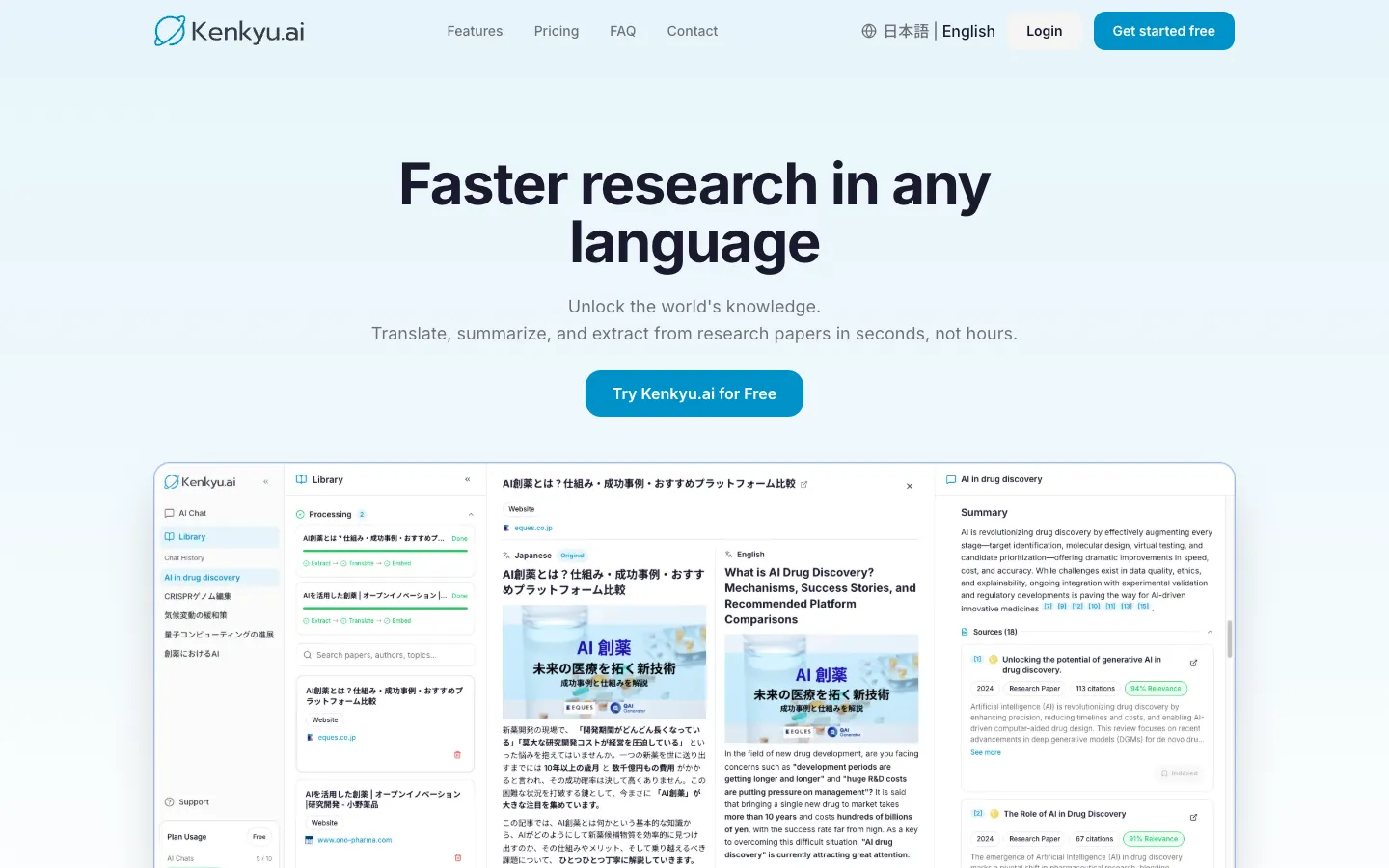
Kenkyu.ai is our Editor's pick because it leads precisely where ChatGPT is weakest, then adds two jobs ChatGPT cannot do well. Where ChatGPT has no corpus, Kenkyu.ai searches the same 200M+ paper index that backs Semantic Scholar. Where ChatGPT translates as an afterthought, Kenkyu.ai renders any paper into your native language and shows it side by side with the original. And where ChatGPT invents references, Kenkyu.ai answers with citations that resolve to the exact source paragraph, so you never have to wonder whether the paper behind a claim is real. For anyone reading or citing work in more than one language, that combination is the clearest upgrade over a general chatbot.
We are honest about why it is an editorial pick rather than the top raw score, and that honesty includes conceding ChatGPT's real strengths. ChatGPT genuinely wins on fluent reasoning and explanation, brainstorming, coding, and sheer ubiquity, and it is the better tool if you want AI to draft long prose, where Kenkyu.ai scores a 0. Specialists also edge it on single jobs: SciSpace and Anara read individual PDFs more deeply, and Elicit owns structured extraction. What none of them combine is cross-language discovery, translation, and source-traceable answers at this price. If you are leaving ChatGPT because you can no longer trust its citations, this is the one to start with.
Key features
- Search across 200M+ papers (Semantic Scholar corpus) plus the web
- Native-language translation of full papers, with a bilingual reading view
- Cited answers that trace to the specific source paragraph, not just a title
- Chat with uploaded PDFs
- Clean console available in English and Japanese
Strengths
Kenkyu.ai's standout is that it is a direct answer to the ChatGPT citation problem: every answer resolves to the source passage, so verification takes seconds, and that grounding is why it scores a 4 on citation trust where ChatGPT scores a 1. It also removes the copy-paste shuffle between a search engine, a translator, and a chatbot, since all three live in one workflow. The free plan is built for trying it without friction: search across the full index is unlimited, with 10 AI chats and 10 uploads per month and no credit card to start. Like most tools here it nudges you toward upgrading, but at roughly $8 per month (¥1,260), Plus is among the most reasonably priced paid tiers in this comparison, and far below ChatGPT Plus at $20.
Weaknesses
Kenkyu.ai is deliberately a research and reading tool, not a writing suite, so it scores a 0 on drafting; if you want AI to write your manuscript, that is a job for ChatGPT or a dedicated writing tool. It is also less of a general-purpose generalist than ChatGPT, so it will not help with code or off-topic questions. Reference management is light (you can save papers, but it is not a full Zotero replacement), there is no browser extension or Word integration yet, and it is a newer name with less brand recognition than its venture-backed rivals, though the underlying corpus is one many of them share.
Price
Free (unlimited search of 200M+ papers, plus 10 AI chats and 10 uploads per month, no credit card). Plus is about $8 per month (¥1,260), with unlimited chat and uploads and larger file limits. Enterprise pricing is custom.
Best for
Multilingual researchers, graduate students, clinicians, and journalists who work across languages, especially Japanese and English, and want trustworthy cited answers instead of a chatbot's confident guesses.
2. SciSpace: the reading copilot for decoding a single PDF
Score breakdown (0 to 5)
Search 3 · Coverage 5 · Synthesis 3 · Q&A 4 · PDF 5 · Data extraction 4 · Translation 2 · Citation trust 3 · Ease 3 · Value 3
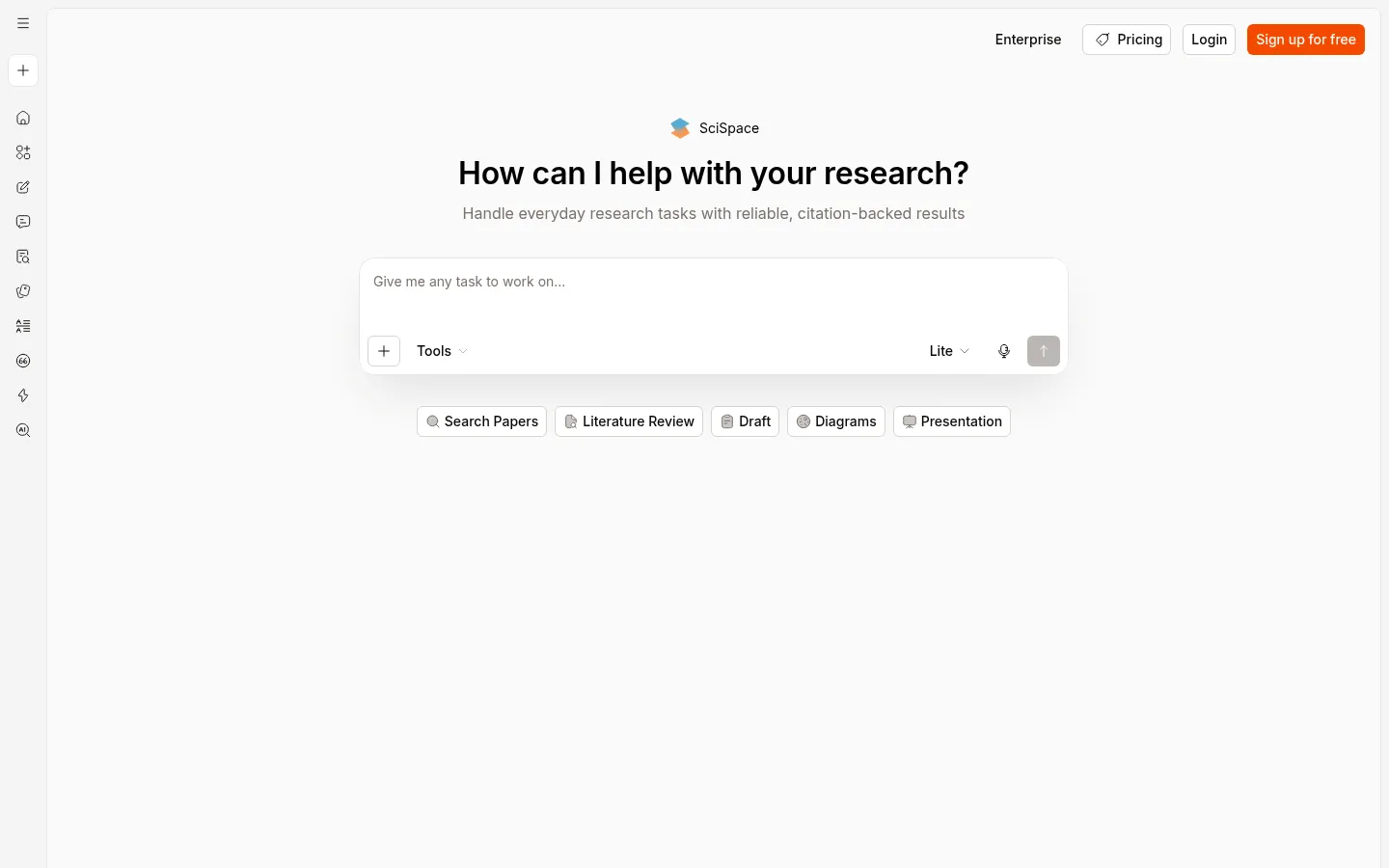
If your main use of ChatGPT is pasting in a PDF and asking what it means, SciSpace is the upgrade. Where ChatGPT can misread a file or invent a reference, SciSpace keeps you anchored to real articles while it explains. Its Chat with PDF copilot lets you highlight any passage and get a plain-language explanation, with deep links back into the source, and on that specific job it is one of the best tools available. It also advertises the largest index in this comparison at 280M+ papers, and wraps a writer, paraphraser, and AI detector around the reader.
Key features
- Highlight-to-explain Chat with PDF with deep links into the source
- Large literature search index (280M+ claimed) with links to real articles
- Data extraction tables across papers
- Writing, paraphrasing, and AI-detection tools
- Chrome extension, mobile app, and a ChatGPT plugin
Strengths
The thing reviewers contrast with ChatGPT most often is that SciSpace shows its work. One associate professor noted it "provides access or links to actual articles that you can then search, to ensure that it's not hallucinating false, nonexistent papers, like some other AI engines," and another described it as "a very different experience than normal chat bots; not like ChatGPT or Gemini." It holds a 4.3 out of 5 on Capterra across 79 reviews, and its breadth lets many users stay in one tool from discovery through a first draft.
Weaknesses
The most common complaint by far is opaque credit consumption: users report burning through credits faster than expected and being pushed to upgrade, and one professor left a one-star review after a refund was refused over consumed credits. SciSpace can still occasionally surface fake references and its own reviewers stress that you must verify the output, so it is more trustworthy than ChatGPT but not hands-off. Discovery returns a partial set rather than exhaustive recall, coverage thins on hard sciences and non-English work, and the sheer number of features can overwhelm new users. For readers who keep hitting credit walls, our SciSpace alternatives guide compares options that bill more predictably.
Price
Free tier available. Premium is $12 per month (annual), Advanced $70 per month, and Max $160 per month, all credit-based, with Enterprise custom.
Best for
Graduate students and postdocs who want to decode individual papers quickly with a reader-first workspace, rather than trusting a general chatbot to summarize a PDF.
3. NotebookLM: source-grounded synthesis and study from your own files
Score breakdown (0 to 5)
Search 0 · Coverage 0 · Synthesis 4 · Q&A 4 · PDF 5 · Data extraction 3 · Translation 1 · Citation trust 5 · Ease 5 · Value 4
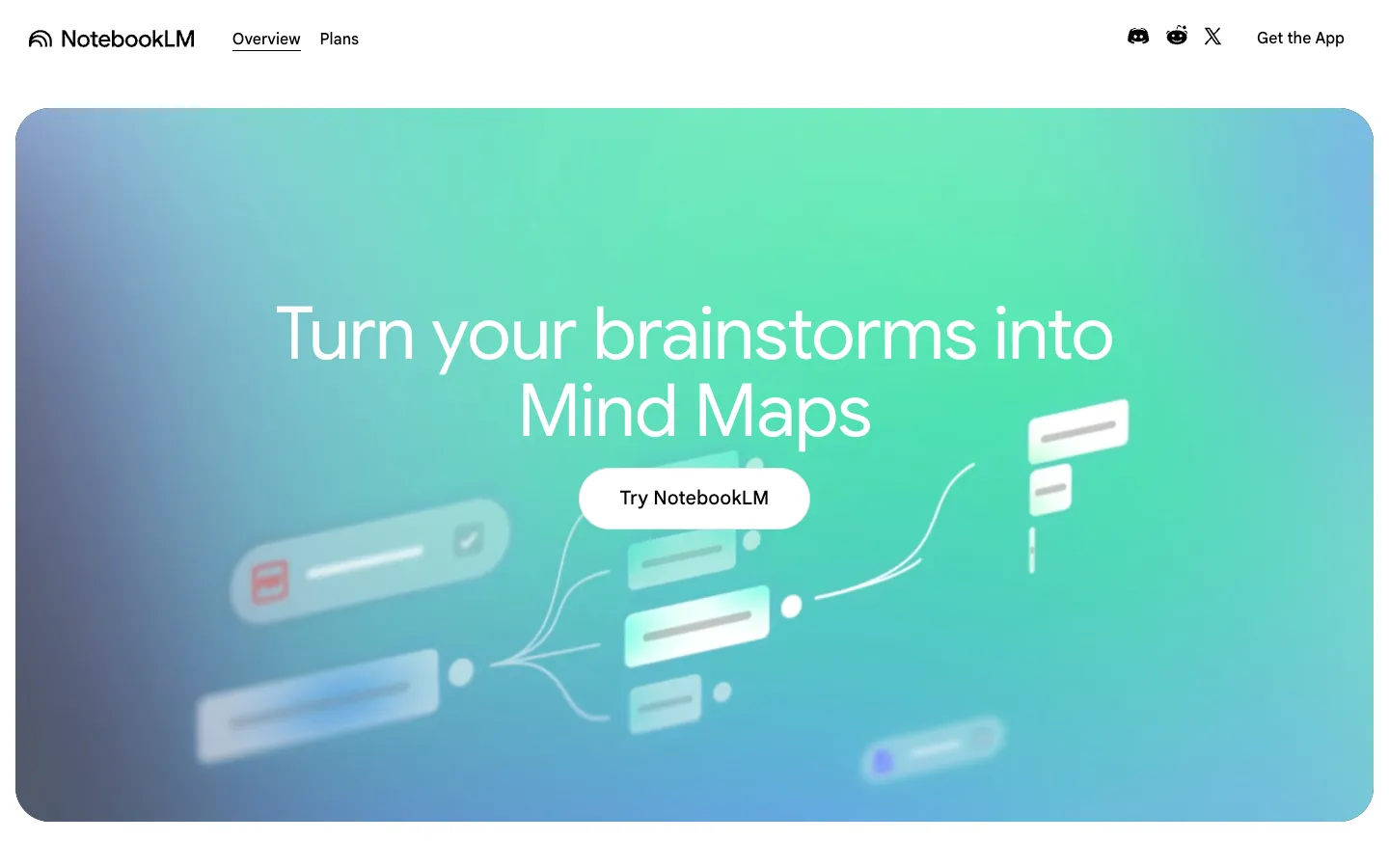
NotebookLM is the structural opposite of ChatGPT on the one thing that matters most here. Google's source-grounded tool works only with the documents you give it and never strays beyond them, which is exactly why it does not fabricate: every answer is grounded in your sources with clickable passages, earning it a 5 on citation trust. An independent measure put its hallucination rate near 13% against roughly 40% for ChatGPT. Its Studio outputs, including podcast-style Audio Overviews, mind maps, and quizzes, are the best in this group for turning sources into study material.
Key features
- Strict source-grounding with clickable in-line passage citations
- Audio Overviews, mind maps, quizzes, and other Studio outputs
- Strong multi-document Q&A and synthesis
- Clean, near-effortless interface (it scores a 5 on ease of use)
- Free tier with 50 sources per notebook
Strengths
For making sense of material you already have, NotebookLM is excellent and very easy to use, and reviewers frame the contrast with ChatGPT directly: "unlike ChatGPT, which sometimes hallucinates when analyzing uploaded files, NotebookLM provides answers with direct links to the source text." It holds a 4.8 out of 5 on G2, and one widely upvoted account reported cutting deep-research time from "2 to 3 hours" to "30 to 40 minutes with better clarity." The clickable passage citations make verification trivial.
Weaknesses
The defining limitation is that NotebookLM cannot find papers at all: it has no search and no corpus (both score 0), so unlike ChatGPT with browsing, it cannot go discover sources for you. The free notebook caps at 50 sources, and users report accuracy degrading as you approach that cap. Export is limited, there is no real collaboration or public API, and the Audio Overviews can occasionally skip key points or invent details. Its translation is minimal, which makes it a poor choice for non-English papers without help. To bolt on discovery or translation, the search-capable picks in our NotebookLM alternatives guide are a better starting point.
Price
Free (50 sources per notebook). Plus is about $7.99 per month and Pro about $19.99 per month, with higher Google tiers above that.
Best for
Synthesizing and studying your own uploaded PDFs and notes with zero risk of fabricated citations. Pair it with a search tool when you also need to discover or translate literature.
4. Paperguide: the affordable all-in-one from discovery to writing
Score breakdown (0 to 5)
Search 3 · Coverage 4 · Synthesis 3 · Q&A 3 · PDF 3 · Data extraction 4 · Translation 0 · Citation trust 3 · Ease 4 · Value 5
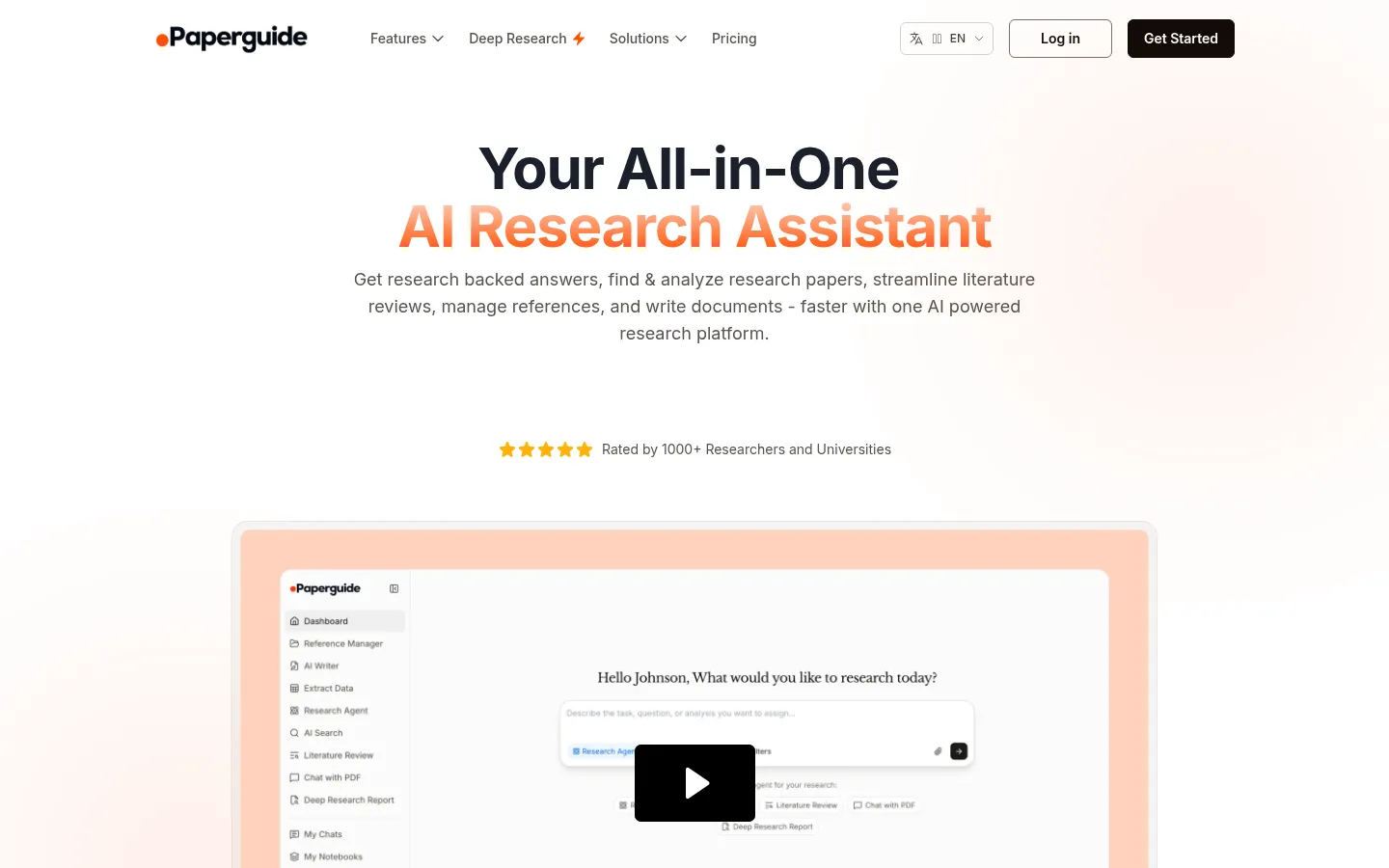
If you have been using ChatGPT as a catch-all for everything from finding papers to drafting, Paperguide is the research-specific, low-cost replacement. It aims to be a connected research operating system: discovery, literature review, data extraction, a full reference manager, and cited writing, all in one affordable place. It is the only tool here to score a 5 on value, and unlike ChatGPT it pairs a real, paper-grounded search with a verification view that checks AI claims against the underlying text.
Key features
- AI search across 200M+ papers with journal-quality signals (SJR, SNIP, quartiles)
- Full reference manager with 1,000+ styles and many import paths
- Structured, multi-step literature review with screening control
- Data extraction and multi-paper Chat with PDF
- "Original Text for Verification" to check AI claims against the source
Strengths
The pitch is consolidation without the premium price, and budget-conscious users respond: Paperguide holds 4.3 out of 5 across 85 AppSumo reviews, and reviewers describe getting source comparisons "within minutes instead of weeks of work." Surfacing journal-quality metrics throughout, plus a verification view that shows the underlying text, gives it the source-checking discipline ChatGPT lacks, at a price well below the premium suites.
Weaknesses
Paperguide's own AI drafts have been flagged by detectors such as GPTZero, and, as with ChatGPT, you still need to double-check the papers it surfaces. Its database is smaller than SciSpace's (200M versus 280M), brand awareness is low, and growth has leaned on lifetime deals and affiliates, which skews some reviews toward deal-buyers. For open-ended conversation and broad explanation, ChatGPT remains more flexible.
Price
Free (1,000 credits per month, 20 searches per month, plus the reference manager). Plus is $12 per month and Pro $24 per month, with a 40% student discount and Enterprise custom.
Best for
Students and researchers on a budget who want one consolidated, paper-grounded tool from discovery through reference management and writing, instead of leaning on a general chatbot.
5. Anara: collaborative, cited chat across your own library
Score breakdown (0 to 5)
Search 2 · Coverage 1 · Synthesis 3 · Q&A 4 · PDF 5 · Data extraction 2 · Translation 1 · Citation trust 4 · Ease 4 · Value 3
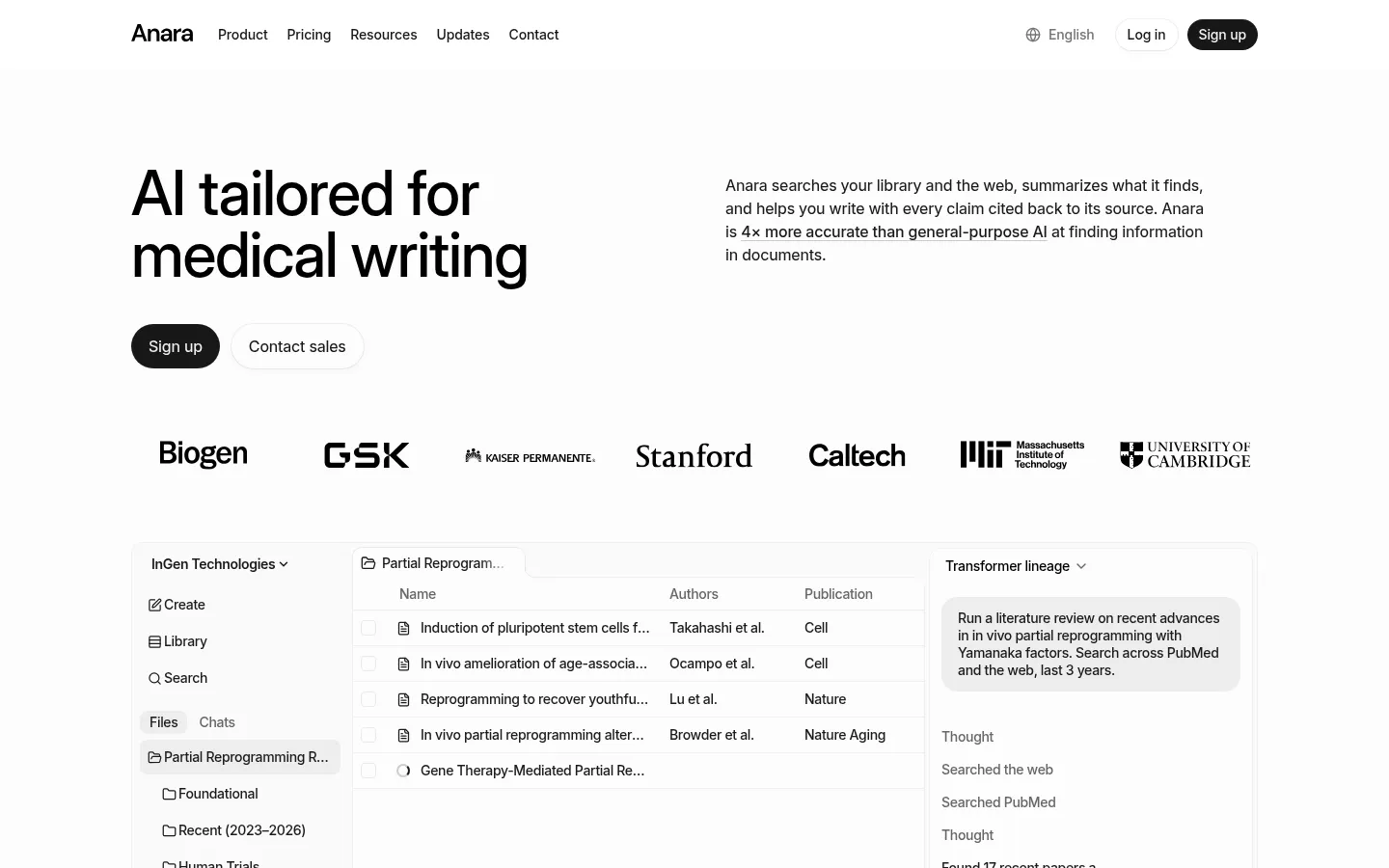
When the ChatGPT habit is dumping several documents into a chat and asking questions across them, Anara is the citation-safe version. Anara (formerly Unriddle) is a collaborative workspace for reading and chatting with documents you upload, and its signature Chat with Folder lets a team query an entire library of their own sources at once, with every answer cited back to a passage. On document reading it scores a 5, and rather than inventing references like ChatGPT, it points to the correct document and section.
Key features
- Chat with Folder across an entire uploaded library
- Accurate passage-level citations on every answer
- Handles PDFs, video, audio, and images in one workspace
- Model choice (GPT, Claude, Gemini) and real-time collaboration
- Connectors for Zotero, Mendeley, Drive, Notion, and OneDrive
Strengths
Reviewers praise the precision of its sourcing: citations are "consistently accurate and contextually relevant," and Anara "pulls references from the correct documents and highlights relevant sections." Its multi-format support and model choice make it one of the more versatile reading tools, collaboration is genuinely useful for teams, and privacy is a real strength (no training on your data, with SOC2 and GDPR coverage). The company reports 3M+ users and 78% citing significant time savings, with use at Stanford, Johns Hopkins, and GSK.
Weaknesses
Like NotebookLM, Anara is not a discovery engine: it has no native corpus, so it reads what you bring it (search and coverage score 2 and 1), and it will not find papers the way ChatGPT's browsing can. Some users find its explanations too general for niche or technical work, and it attracts skepticism over heavy affiliate and influencer marketing, with researchers on Reddit questioning the hype and at least one reporting an unexpected charge, so watch the free-tier limits and billing settings. Even its model-knowledge mode can hallucinate if you leave it on, so reviewers advise keeping answers tied to real sources.
Price
Free (2,000 words per day, 5 uploads per day). Plus is about $10 per month, Pro about $20 per month, and Max about $167 per month, with Enterprise custom.
Best for
Individuals and teams who want to read, annotate, and collaboratively query their own document libraries with reliable citations, not a chatbot's best guess.
6. Elicit: the systematic-review and data-extraction specialist
Score breakdown (0 to 5)
Search 3 · Coverage 4 · Synthesis 4 · Q&A 3 · PDF 2 · Data extraction 5 · Translation 0 · Citation trust 5 · Ease 3 · Value 3
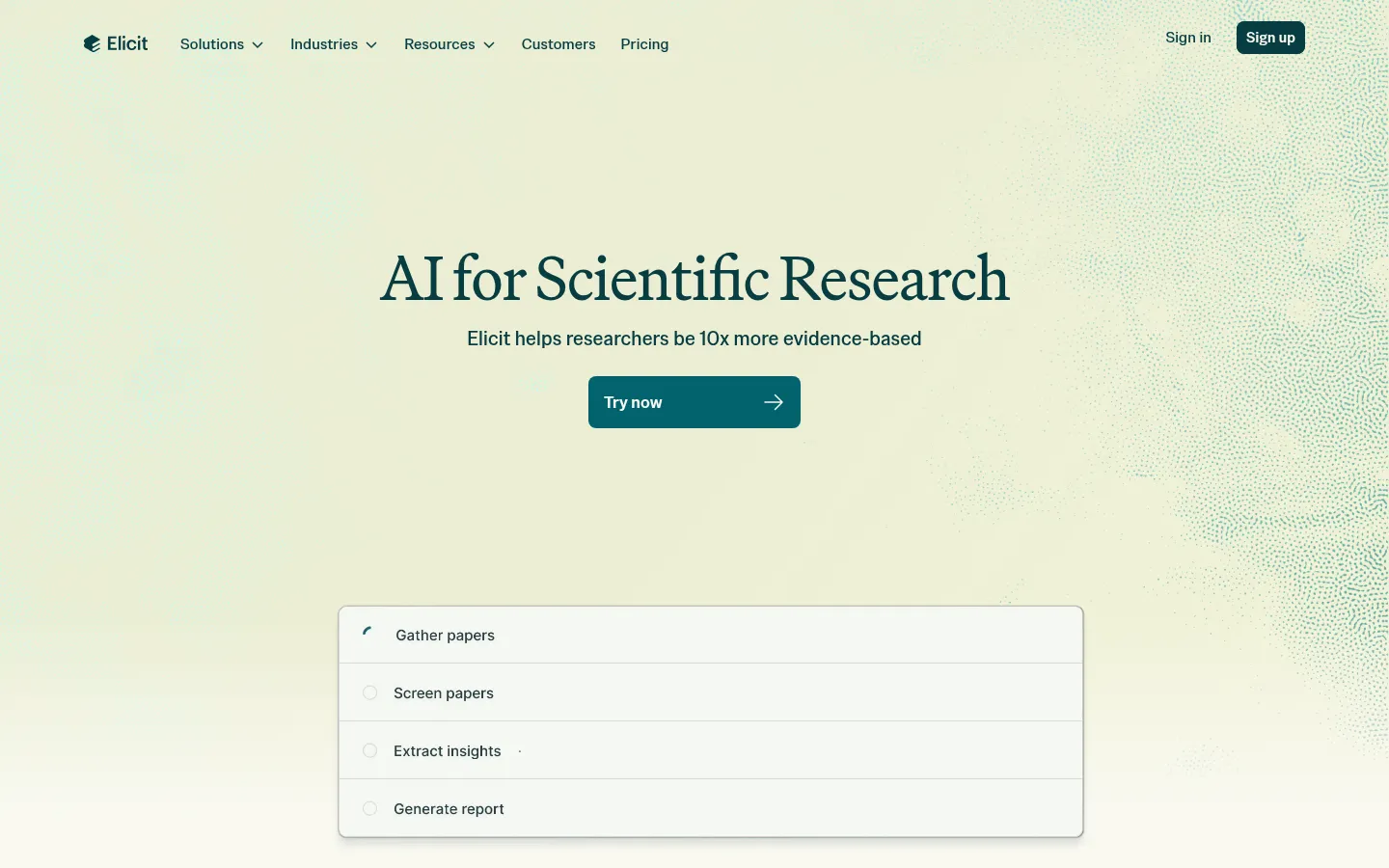
If you have ever asked ChatGPT to "summarize the literature on X" and been burned by invented studies, Elicit is the opposite approach. It is built for one demanding job and does it better than anyone: screening and extracting structured data from large bodies of literature with sentence-level citations. It is one of only two tools here to earn a 5 on citation trust, and the only one to earn a 5 on data extraction. For a systematic review or consistent fields across dozens or hundreds of papers, this is the benchmark, not a chatbot.
Key features
- Structured data-extraction tables with custom columns across many papers
- PRISMA-style screening across thousands of papers
- Sentence-level citations on extracted claims
- Index of 138M+ papers plus 545k clinical trials
- Generous free tier with unlimited search
Strengths
Elicit's accuracy on its core task is documented: in a case study with VDI/VDE IT it correctly extracted 1,502 of 1,511 data points, a 99.4% rate, and enterprise users such as Oxford PharmaGenesis report delivering literature reviews "at an unprecedented scale." Unlike ChatGPT, which answers confidently even when wrong, Elicit's team is candid that it errs toward "saying nothing rather than something wrong," which is exactly the posture a review needs.
Weaknesses
Elicit is a screening and extraction engine, not a reader or a writer: there is no upload-and-chat PDF workflow (it scores a 2 on PDF analysis) and no drafting at all, which is where ChatGPT is stronger. Its own help center cautions that it "summarizes the findings of a bad study just like it summarizes the findings of a good study," and one peer-reviewed evaluation found its search sensitivity averaged 39.5% against 94.5% for traditional searching, so it does not replace exhaustive search on its own. There is also a steep jump from the free tier to the paid plans. Our Elicit alternatives guide compares the field in detail.
Price
Free (limited agent, 2 reports per month, unlimited search). Plus is about $10 per month, Pro $29 per month, and Scale $49 per month, with Enterprise custom.
Best for
Graduate students and researchers doing systematic reviews and structured evidence extraction where accuracy and traceability matter most.
7. Perplexity: fast cited answers on current, open-web topics
Score breakdown (0 to 5)
Search 4 · Coverage 2 · Synthesis 3 · Q&A 3 · PDF 3 · Data extraction 1 · Translation 0 · Citation trust 3 · Ease 5 · Value 4
Perplexity is the closest in spirit to ChatGPT, a general answer engine, but it retrieves sources before it answers instead of generating from memory, which is why it is generally more citation-accurate than ChatGPT. It scores a 5 on ease, the highest in this group, and it handles recent topics best because it queries the live web rather than a fixed corpus. Researchers use its Academic Focus and Deep Research modes for fast, cited first-pass scoping.
Key features
- Clickable citations on every answer
- Strongest performance on current and time-sensitive topics
- Model switching and a Deep Research mode
- Useful free tier and broad cross-platform apps
- Academic Focus for scholarly sources
Strengths
Speed, polish, and current coverage are Perplexity's calling cards: it holds a 4.7 out of 5 on G2, and reviewers repeatedly cite the clickable citations as a trust-builder where ChatGPT shows no sources by default. It performs best when the material is recent and open-access, such as policy papers, government PDFs, and widely reported findings, and Deep Research is strong on regulatory or technical-policy questions grounded in well-defined documents.
Weaknesses
For formal academic work, reliability is still the catch, just less severe than with ChatGPT. A Columbia Journalism Review audit by the Tow Center found Perplexity answered roughly 37% of queries incorrectly, citations sometimes link to a homepage or a syndicated copy rather than the article of record, and it can produce speculative syntheses that do not match the linked source. It has no proprietary paper index (coverage scores 2), and some longtime users perceive a 2026 quality regression. Treat it as a starting point to verify, which is why citation trust scores a 3. Our Perplexity research alternatives guide goes deeper on academic use.
Price
Free tier available. Pro is $20 per month, Max $200 per month, and Education Pro $10 per month, with Enterprise from $40 per seat.
Best for
Fast, cited first-pass scoping on current, open-web topics. Pair it with a grounded academic tool when you need verifiable paper sourcing.
8. Consensus: the fastest way to ask a yes or no research question
Score breakdown (0 to 5)
Search 4 · Coverage 4 · Synthesis 3 · Q&A 4 · PDF 1 · Data extraction 3 · Translation 0 · Citation trust 4 · Ease 4 · Value 4
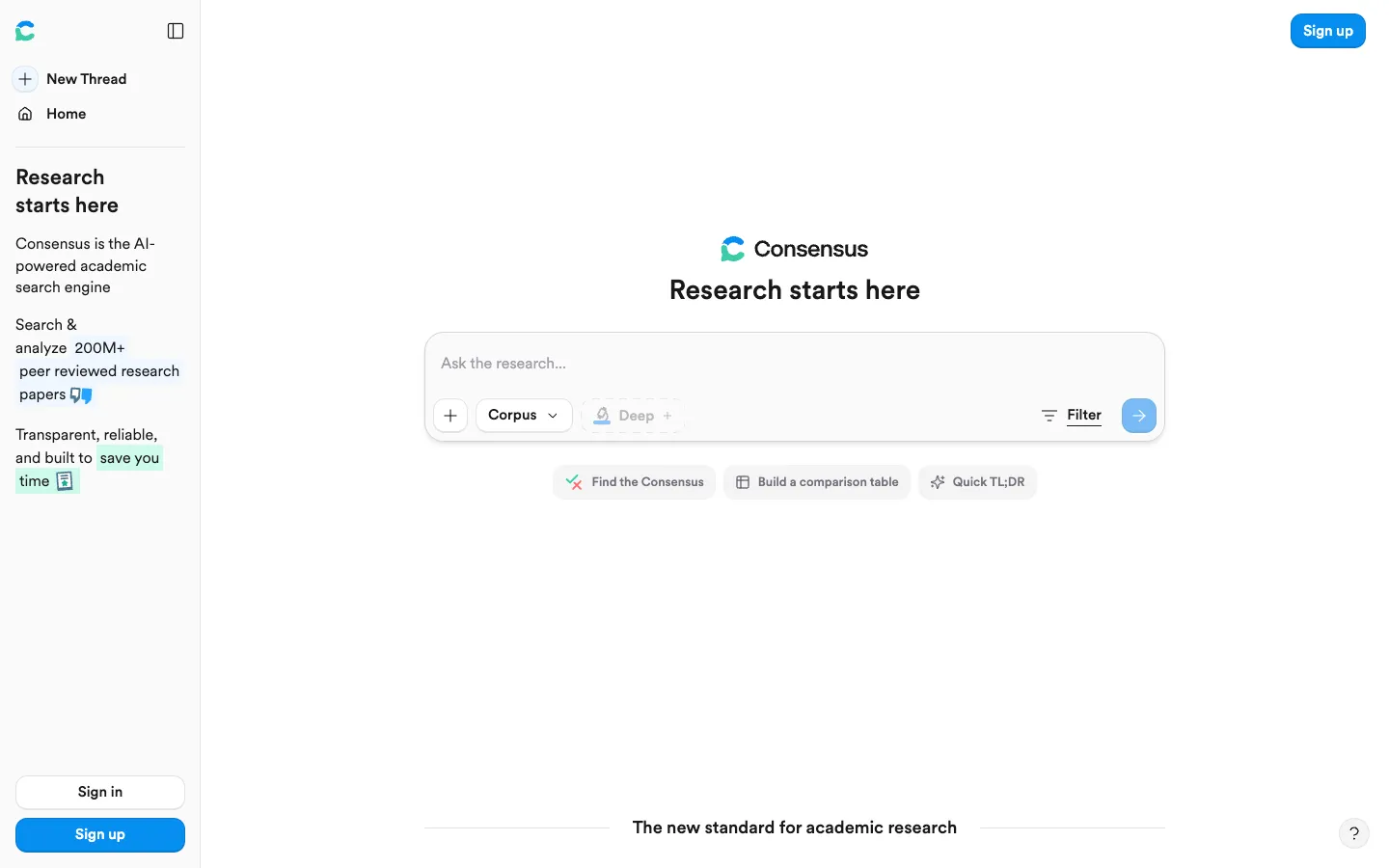
Ask ChatGPT whether the evidence supports a claim and you tend to get a confident generality. Consensus answers the same question from peer-reviewed papers instead. Its Consensus Meter reads across the literature and tells you whether studies tend to support, oppose, or are mixed on a yes or no question. Built on the Semantic Scholar 200M+ index, it is trained on academic text rather than the open web, so, as one reviewer put it, its answers stay "academically focused" in a way ChatGPT's do not.
Key features
- The Consensus Meter: a support, oppose, or mixed verdict across many studies
- Best-in-class filters (year, journal rank, citation count, methodology, field, population)
- Study Snapshot extracting population, methods, outcomes, and results
- Deep Search for automated mini literature reviews
- Built on a 200M+ paper index
Strengths
For "what does the literature say" questions, Consensus is fast and trustworthy. A PhD candidate called it "essential to my dissertation workflow," and reviewers note they "tend to trust this reply over clickbait Google articles." Its filtering is unusually deep, its Study Snapshots are especially useful in medical domains, and Deep Search approximates an entire iterative review. It is free to try (15 Pro messages and 3 Deep reviews per month) with a low $10 Pro tier and student and clinician discounts.
Weaknesses
The Consensus Meter is also the boundary of the tool: it shines on yes or no questions and is weaker on open-ended or reasoning-heavy ones, which is exactly where ChatGPT's flexibility still helps. There is no deep-linking into PDFs, so verifying a finding means opening the source yourself (PDF analysis scores a 1). Because results carry some randomness they are not reproducible, which makes Consensus unsuitable for formal systematic reviews, and its interface leans toward medical and social-policy research. If you need open-ended answers or translation too, our Consensus alternatives guide compares the options.
Price
Free (15 Pro messages per month, 3 Deep reviews per month). Pro is $10 per month and Deep $45 per month, with up to a 40% student and clinician discount and Team or Enterprise custom.
Best for
Students, researchers, and clinicians doing fast, evidence-based scoping of yes or no questions.
9. ChatGPT (baseline): explaining, outlining, editing, and general use
Score breakdown (0 to 5)
Search 2 · Coverage 0 · Synthesis 4 · Q&A 4 · PDF 3 · Data extraction 2 · Translation 2 · Citation trust 1 · Ease 5 · Value 3
ChatGPT is the baseline every tool above is measured against, and it remains a strong one for the right jobs. Whether you should switch depends on what you use it for. It is first-rate at general reasoning and explanation, brainstorming, coding, English editing, and, on paid tiers, Deep Research synthesis, and it scores a 5 on ease of use. Being the tool most people already have is a genuine advantage. But for treating a paper as a citable source, it has no academic database and can fabricate references, which is why citation trust scores the lowest here at 1.
Key features
- High-quality general reasoning, explanation, and conversation
- Outlining, drafting, and English editing
- Deep Research synthesis across many sources (paid tiers)
- PDF upload and chat, image generation, coding help
- Web, iOS, Android, desktop, and 60+ connectors (Business)
Strengths
ChatGPT's real value is flexibility and reach. Deep Research is praised repeatedly, with users reporting "20 to 30 page analyses" with citations attached. For structuring a literature review and editing prose, even a prominent academic on YouTube frames the right use plainly: using ChatGPT for an outline and edits "is not cheating," more like getting a framework from a professor. It is especially helpful for non-native English writers polishing a draft.
Weaknesses
The core research weakness is citation fabrication: peer-reviewed studies put GPT-4 at 18% fabricated references plus errors in many real ones, and a GPT-4o study found more than half of citations fabricated or error-laden. It has no proprietary paper index (coverage scores 0), it loses context on long threads, and model changes draw instability complaints. The same academic who recommends it for editing sends users to Google Scholar and Zotero to actually find papers, conceding ChatGPT should not be trusted to source real work.
Price
Free (ad-supported in the US). Go is about $8 per month, Plus $20 per month, and Pro from $100 per month. Business and Enterprise are custom.
Best for
Explaining concepts, outlining, editing, coding, and general-purpose work. Not for finding real papers or producing source-traceable citations.
How we scored these tools
Every tool here is scored once, on the same 13-point rubric, on a 0 to 5 scale where 0 means the capability is absent or unusable and 5 means best in class. The criteria are search and discovery, corpus coverage, synthesis and summarization, conversational Q&A, document and PDF analysis, translation, reference management and export, writing and drafting, data extraction, citation integrity, ease of use, value, and integrations. Scores are grounded in documented features, official pricing, and real user sentiment from review sites and research communities, not vendor marketing. Vendor-reported figures such as corpus sizes and accuracy percentages are treated conservatively and labeled as claims.
For this ChatGPT comparison, we weight the criteria toward what matters when you use a chatbot for research: conversational Q&A and citation integrity carry the most weight, followed by search, synthesis, PDF analysis, writing, data extraction, ease of use, and value. Translation is not part of the ranking math here, but we show it because it separates tools that can handle non-English work from those that cannot. We then rank the field by that weighted result. Kenkyu.ai is named Editor's pick because it most directly fixes ChatGPT's biggest weakness, source-traceable citations, while adding discovery and translation, not because it posts the highest raw composite. The full per-criterion scores below let you re-weight for your own priorities.
The full scores for all nine tools:
| Tool | Search | Coverage | Synthesis | Q&A | Translation | Ref mgmt | Writing | Extraction | Citation trust | Ease | Value | Integrations | |
|---|---|---|---|---|---|---|---|---|---|---|---|---|---|
| Kenkyu.ai | 3 | 4 | 3 | 3 | 3 | 4 | 2 | 0 | 2 | 4 | 4 | 4 | 1 |
| SciSpace | 3 | 5 | 3 | 4 | 5 | 2 | 3 | 3 | 4 | 3 | 3 | 3 | 4 |
| NotebookLM | 0 | 0 | 4 | 4 | 5 | 1 | 1 | 3 | 3 | 5 | 5 | 4 | 2 |
| Paperguide | 3 | 4 | 3 | 3 | 3 | 0 | 5 | 3 | 4 | 3 | 4 | 5 | 4 |
| Anara | 2 | 1 | 3 | 4 | 5 | 1 | 3 | 3 | 2 | 4 | 4 | 3 | 4 |
| Elicit | 3 | 4 | 4 | 3 | 2 | 0 | 2 | 0 | 5 | 5 | 3 | 3 | 3 |
| Perplexity | 4 | 2 | 3 | 3 | 3 | 0 | 1 | 2 | 1 | 3 | 5 | 4 | 3 |
| Consensus | 4 | 4 | 3 | 4 | 1 | 0 | 2 | 0 | 3 | 4 | 4 | 4 | 2 |
| ChatGPT | 2 | 0 | 4 | 4 | 3 | 2 | 0 | 4 | 2 | 1 | 5 | 3 | 4 |
The table shows ChatGPT's profile in sharp relief: it stacks up high marks for synthesis, Q&A, writing, and ease of use, and bottoms out at 1 on citation trust, which is the line that sends researchers looking for alternatives. SciSpace, NotebookLM, and Anara win on source-grounded reading, Elicit and Consensus lead on citation integrity and discovery, and Kenkyu.ai is the most balanced across discovery, understanding, translation, and trust, which is why it is our pick for replacing ChatGPT when sources have to hold up, especially across languages.

Written by
Timothy Andersen, Kenkyu.ai Founder