

Key Stats
About Ibaraki University
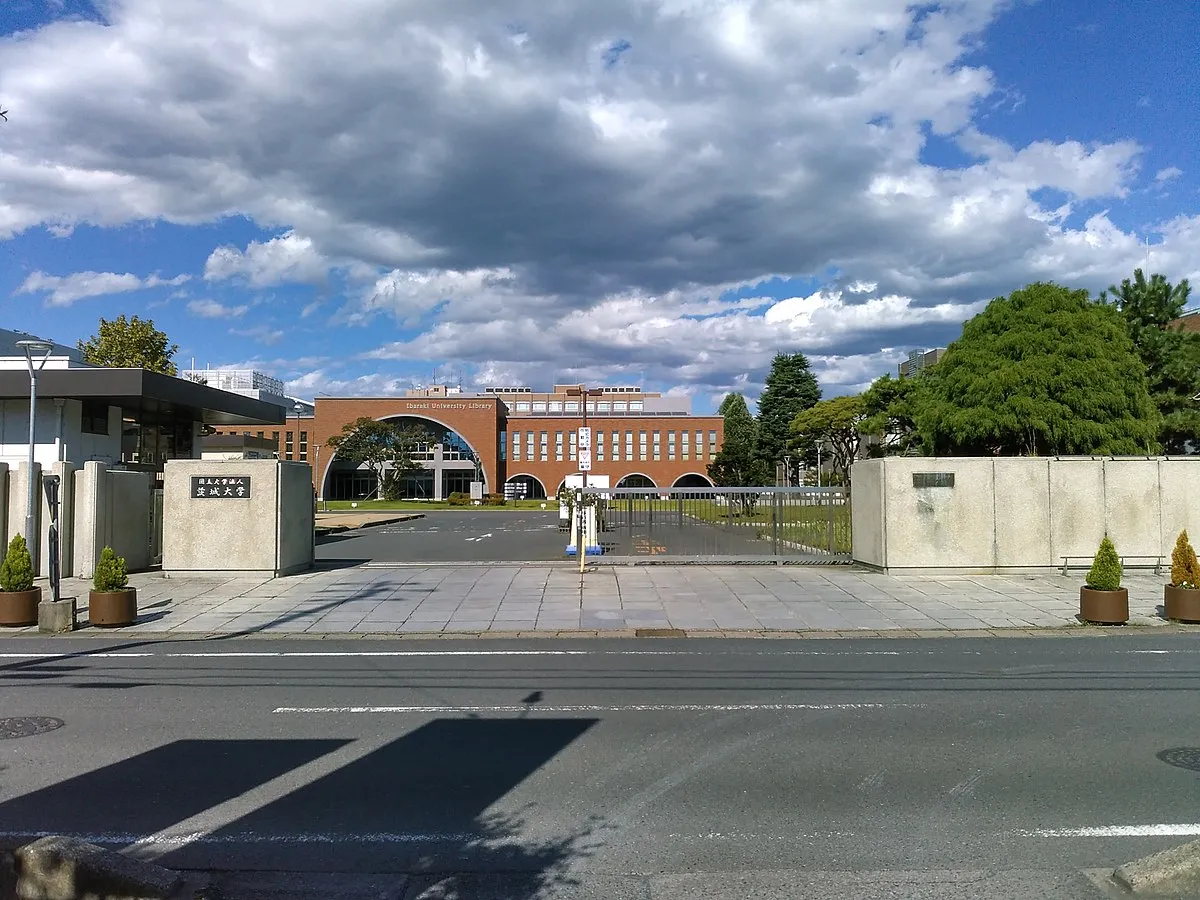
Ibaraki University is a national university headquartered in Mito City, Ibaraki Prefecture. It emphasizes collaboration with the local community while providing outstanding education and research across a wide range of academic fields. Since its establishment in 1949, the university has promoted high-level research in diverse areas—from natural sciences to humanities and social sciences, education, and agriculture—producing many talented graduates. It is especially strong in the sciences, offering practical learning opportunities through experiments and fieldwork.
Academic Research Highlights
Ibaraki University advances cutting-edge research with a focus on “scientific curiosity” and “community contribution.” The university comprises a variety of faculties, including the Faculty of Science and Engineering, Faculty of Agriculture, and Faculty of Education, as well as the Faculties of Humanities and Informatics, creating a rich interdisciplinary research environment. The Faculty of Agriculture actively conducts research on sustainable agriculture and environmental conservation, leveraging Ibaraki Prefecture’s abundant natural resources. Meanwhile, the Faculty of Science and Engineering concentrates on advanced technology fields such as AI, robotics, materials science, and life sciences, and engages in numerous industry-academia collaborative projects.
Research Facilities and Support System
One of Ibaraki University’s key attractions is its state-of-the-art research facilities. Equipped with specialized experimental instruments and analytical devices, the university provides an environment where undergraduate and graduate students can independently pursue research. Additionally, the university offers comprehensive support for academic research, including assistance with joint research projects domestically and internationally, conference presentations, and research funding applications. Through close communication with faculty and researchers, students can define their research themes early on and develop deep expertise and practical skills.
Graduate Research Environment
The graduate school offers a wide range of research fields in both master’s and doctoral programs, fostering an environment conducive to in-depth specialization. With extensive exchange programs and collaborations with research institutions both in Japan and abroad, students can conduct research with a global perspective. Under the careful guidance of faculty advisors, students are encouraged to enhance their thesis writing and presentation skills, making the graduate school an ideal place for those aiming for an academic career.
Future Career Paths
Research experience at Ibaraki University opens doors to diverse career opportunities, including academic positions at universities and research institutions, R&D roles in private companies, and technical positions in public organizations. The university maintains strong ties with local businesses and prefectural research centers, offering abundant opportunities for internships and collaborative research. Ibaraki University actively supports entrepreneurship and career development, assisting each student in planning their future. For students passionate about scholarship and eager to contribute their ideas to society, Ibaraki University provides an optimal environment to thrive.
Ranking Data
| Subject | Japan Rank | World Rank | Score |
|---|---|---|---|
| Overall | 94 | 1501 | 48 |
| Social Sciences | - | - | - |
| Engineering | 55 | 1251 | 9.4–19.4 |
| Business & Economics | - | - | - |
| Arts & Humanities | - | - | - |
| Education Studies | - | - | - |
| Medical & Health | - | - | - |
| Psychology | - | - | - |
| Computer Science | - | - | - |
| Life Sciences | 45 | 1001 | 10.8–20.7 |
| Physical Sciences | 22 | 1001 | 9.3–26.0 |
| Metric | Score |
|---|---|
| Overall Score | 48 |
| Teaching | 10.5–25.1 |
| Research Environment | 12.4 |
| Research Quality | 13.3 |
| International Outlook | 26.7 |
Most Cited Researchers
| Researcher | Subjects | Citations |
|---|---|---|
Kaoru Kurosawa | 8,693 | |
Kiyoshi Fujisawa | Inorganic Chemistry | 7,238 |
Takuji Yamada  | Seismology, Volcanology, Geophysics | 6,427 |
Tetsuo Gotoh | Acarology, Entomology, Systematics, Taxonomy | 6,365 |
MUNETAKE MOMOSE | Astronomy, Astrophysics, Planet Formation, Star Formation | 6,049 |
Shigeru Kuramoto | Mechanical Properties of Metallic Materials | 5,861 |