

Key Stats
About the University of Tokyo
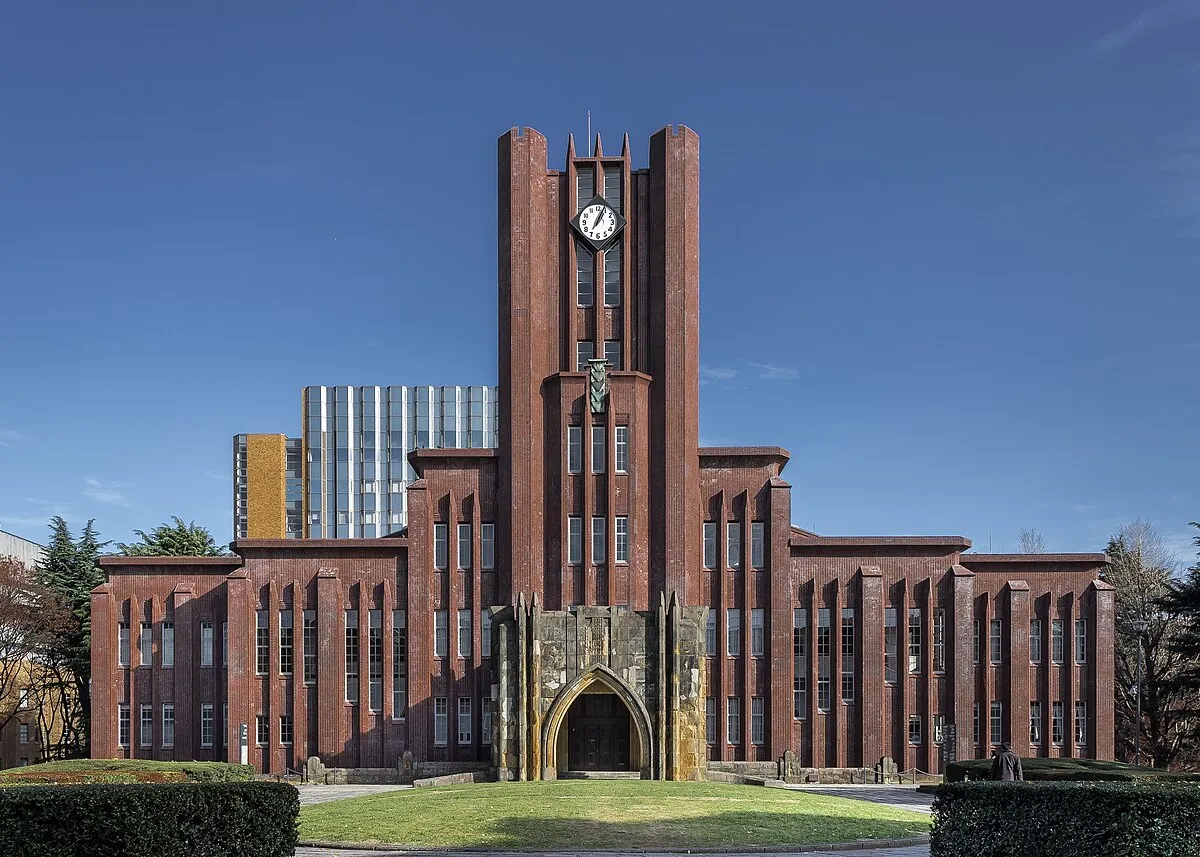
The University of Tokyo (abbreviated as Todai) is Japan’s premier national university, established in 1877. As the pinnacle of higher education in Japan, it consistently receives high acclaim both domestically and internationally, ranking among the top universities worldwide. Especially in research, the university produces cutting-edge achievements across a wide range of academic fields, providing an ideal environment for students aspiring to pursue scholarly research.
Research Environment and Facilities
The University of Tokyo boasts the largest research budget in Japan and is equipped with numerous outstanding research facilities and laboratories. The campus is primarily divided into three locations: Hongo, Komaba, and Kashiwa, each specializing in distinctive research areas. The Hongo campus serves as the traditional hub for humanities, social sciences, and natural sciences. Komaba campus focuses mainly on liberal arts education. Meanwhile, the Kashiwa campus promotes advanced research in science and engineering, with vibrant activities in cutting-edge ICT technologies and life sciences.
Distinguished Faculty and Leading Research Fields
The University of Tokyo is home to many renowned professors, including Nobel laureates and researchers recognized both in Japan and internationally. Students have the opportunity to work directly with faculty members active in diverse fields such as physics, medicine, engineering, law, economics, and literature. The university leads domestic research in areas like quantum physics, artificial intelligence (AI), regenerative medicine, and environmental science, and actively participates in numerous global collaborative research projects.
Student Support and Career Development
The University of Tokyo offers comprehensive support systems for graduate students and researchers, including scholarship programs and research funding. It also encourages exchanges and internships with domestic and international research institutions, as well as support for participation in academic conferences. The Career Center provides consultations and seminars tailored to a wide range of career paths beyond academia and research positions, creating an environment where students can focus on their academic pursuits while considering diverse future opportunities.
Summary
For undergraduate and graduate students passionate about academic research, the University of Tokyo is one of the best choices. Backed by a rich history and tradition, an excellent faculty, world-class research facilities across various disciplines, and extensive student support systems, it offers an optimal environment to launch a career as a researcher. We invite you to pursue your academic dreams and goals at the University of Tokyo.
Ranking Data
| Subject | Japan Rank | World Rank | Score |
|---|---|---|---|
| Overall | 3 | 28 | 82 |
| Social Sciences | 1 | 35 | 71.8 |
| Engineering | 1 | 31 | 80.5 |
| Business & Economics | 1 | 28 | 71.7 |
| Arts & Humanities | 1 | 67 | 58.7 |
| Education Studies | 1 | 24 | 74.2 |
| Medical & Health | 1 | 27 | 80 |
| Psychology | 1 | 72 | 62.2 |
| Computer Science | 1 | 37 | 80.7 |
| Life Sciences | 1 | 30 | 83.2 |
| Physical Sciences | 1 | 25 | 81.4 |
| Metric | Score |
|---|---|
| Overall Score | 82 |
| Teaching | 83.3 |
| Research Environment | 94.2 |
| Research Quality | 68.3 |
| International Outlook | 50.4 |
Most Cited Researchers
| Researcher | Subjects | Citations |
|---|---|---|
Noboru Mizushima | 171,247 | |
KC Cannon  | 128,316 | |
Hiroaki Aihara | High Energy Physics, Particle Physics, Accelerators, Observational Cosmology | 114,814 |
Masahira Hattori | Microbiome, Metagenomic Analysis, Genomics | 113,096 |
Kazunori Kataoka | Biomaterials, Polymers, Drug Delivery, Nanotechnology | 109,378 |
Chenxi Wang (王晨曦) | Bonding, Alignment, Microsystems, Microfluidics | 109,091 |