
Key Stats
About Tokyo University of Science
Tokyo University of Science (commonly known as TUS) is a prestigious private university in Japan, specializing primarily in science and engineering fields. Founded in 1881, it boasts a long history and a solid track record of excellence in advanced education and research in science and technology. The university is particularly strong in interdisciplinary areas such as science, engineering, pharmaceutical sciences, and management, offering a curriculum that seamlessly integrates theory with practical application.
Research-Focused Environment
Tokyo University of Science places great emphasis on research activities, including those at the graduate level, with numerous laboratories engaged in cutting-edge scientific and technological development. The university has earned international recognition across a broad range of research fields, including materials science, information and communications, biology, environmental engineering, and nanotechnology. With substantial research funding and active industry-academia collaboration projects, students have access to state-of-the-art facilities and technologies to support their research endeavors.
Features of Undergraduate and Graduate Programs
The Faculty of Science and the Faculty of Engineering provide specialized foundational education alongside hands-on experiments and practical training, fostering students’ creativity and problem-solving skills. Graduate programs extend through doctoral studies, with vibrant joint research initiatives in partnership with domestic and international research institutions and companies. Numerous exchange programs with leading universities worldwide offer abundant opportunities for students to broaden their global perspectives.
Student Life and Career Support
To enable students to focus on their research, the university offers comprehensive scholarship programs and research grants. Career support is also robust, providing tailored assistance such as internship placements, corporate matchmaking, and job counseling for students aiming for careers in research and technical fields. Leveraging its extensive network, the university helps expand employment opportunities across academic institutions and industries both throughout Japan and internationally.
Campuses and Facilities
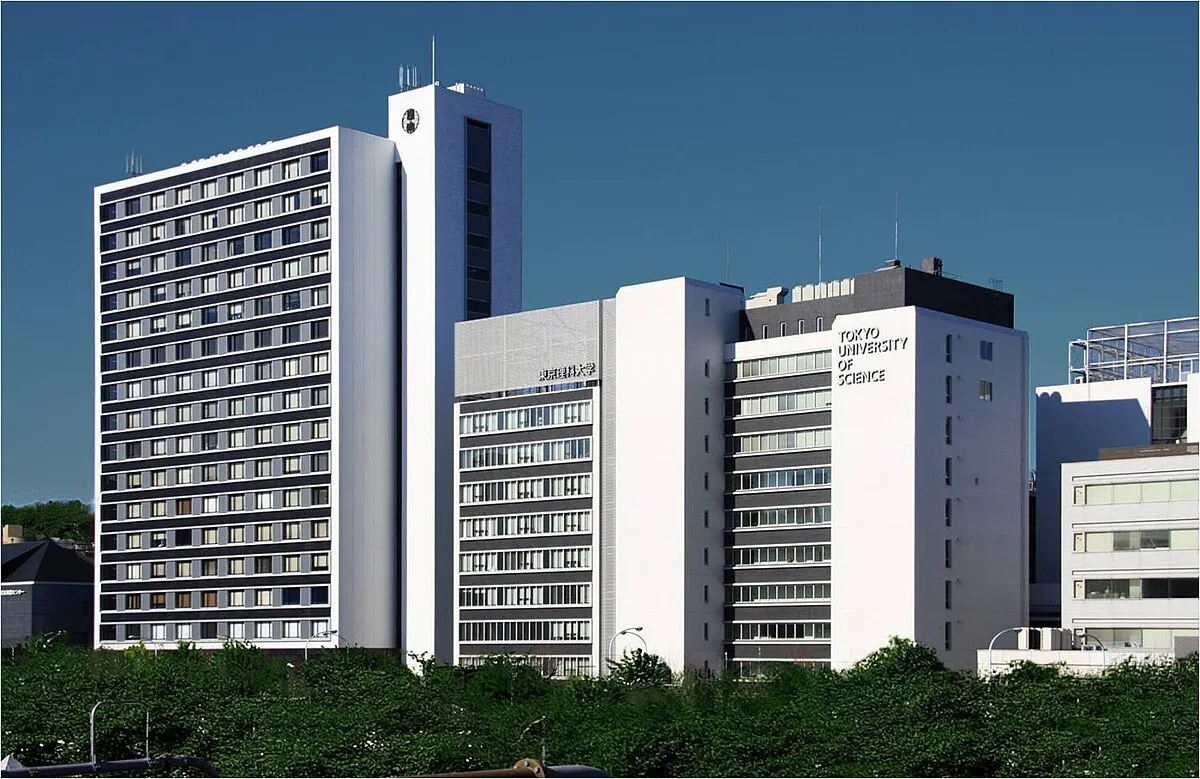
Tokyo University of Science is primarily divided into the Kagurazaka Campus, Shinjuku Campus, and Katsushika Campus, each equipped with specialized facilities tailored to their respective fields. The campuses feature cutting-edge research equipment and advanced experimental apparatus, creating an exceptionally supportive environment for student research. A vibrant community of science students fosters a culture of mutual growth and collaboration.
In summary, Tokyo University of Science offers an ideal environment for students who aspire to contribute to society through research, making it especially recommended for those aiming to pursue a career in academic research in the future.
Ranking Data
| Subject | Japan Rank | World Rank | Score |
|---|---|---|---|
| Overall | 39 | 1201-1500 | 57 |
| Social Sciences | - | - | - |
| Engineering | 16 | 601–800 | 30.6–35.7 |
| Business & Economics | - | - | - |
| Arts & Humanities | - | - | - |
| Education Studies | - | - | - |
| Medical & Health | 62 | 801–1000 | 20.7–26.7 |
| Psychology | - | - | - |
| Computer Science | 24 | 801–1000 | 21.5–28.6 |
| Life Sciences | 24 | 601–800 | 27.6–34.6 |
| Physical Sciences | 50 | 1001 | 9.3–26.0 |
| Metric | Score |
|---|---|
| Overall Score | 57 |
| Teaching | 25.2–30.6 |
| Research Environment | 24.8 |
| Research Quality | 25.5 |
| International Outlook | 30.5 |
Most Cited Researchers
| Researcher | Subjects | Citations |
|---|---|---|
Akira Fujishima | Photocatalysis, Boron-Doped Diamond Electrodes | 173,133 |
Shinichi Komaba  | Electrochemistry, Li/Na/K/Rb Ion Batteries, Biofuel Cells, Ion Sensors | 45,931 |
Atsushi Ochiai | Pathology, Carcinogenesis, Digital Pathology, Radiation Biology | 44,524 |
Mitsuo Gen | Evolutionary Computation, Reinforcement Learning, Manufacturing Scheduling, Sustainable SCM Models | 35,777 |
Kazuyuki Kuchitsu | Plant Cell and Molecular Biology, Signal Transduction, Stress Response, Reactive Oxygen Species | 24,097 |
Hiroshi Nishihara | Chemistry | 20,316 |