

Key Stats
About Yamagata University
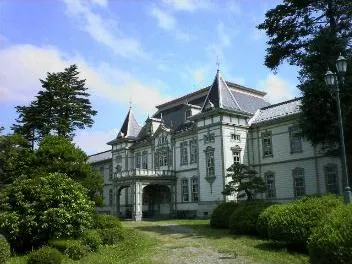
Yamagata University is a national university headquartered in Yamagata City, Yamagata Prefecture, established in 1949. Surrounded by a rich natural environment, the campus offers an ideal setting for focused academic pursuits. The university balances community-based education with cutting-edge research, earning high acclaim particularly in the fields of science, engineering, medicine, agriculture, and education.
Research Environment and Features
Although relatively small in scale, Yamagata University boasts well-equipped research facilities, where each faculty member provides attentive guidance to students. The university actively promotes interdisciplinary research, collaborating with domestic and international institutions in areas such as environmental science, advanced materials, and life sciences to conduct pioneering studies. Additionally, under the banner of “regional co-creation,” it carries out numerous practical research projects in partnership with the local community.
Graduate Programs
The graduate school offers master’s and doctoral programs, with particularly robust support systems for doctoral students aiming to become researchers and specialized professionals. Beyond deepening expertise in their fields, students benefit from ample opportunities to develop practical skills essential for researchers and to present their work internationally, making it an excellent environment for those pursuing academic careers. Scholarship programs and research funding are also well-established, providing strong financial support.
Student Life and Access
The university’s campus is conveniently located near the center of Yamagata City, offering great convenience for daily life. Student dormitories and nearby apartments are plentiful, fostering vibrant community life through shared living. The campus is enriched by beautiful seasonal nature and a diverse food culture, providing a refreshing atmosphere for students to unwind between research activities.
Overall, Yamagata University promotes research with a global perspective while remaining deeply rooted in its local community, making it an attractive choice for students aiming for academic careers. It is especially well-suited for those who wish to engage deeply in their specialized fields or who have an interest in regional issues and environmental challenges.
Ranking Data
| Subject | Japan Rank | World Rank | Score |
|---|---|---|---|
| Overall | 61 | 1201-1500 | 52 |
| Social Sciences | - | - | - |
| Engineering | 45 | 1001–1250 | 19.5–25.5 |
| Business & Economics | - | - | - |
| Arts & Humanities | - | - | - |
| Education Studies | - | - | - |
| Medical & Health | 69 | 801–1000 | 20.7–26.7 |
| Psychology | - | - | - |
| Computer Science | - | - | - |
| Life Sciences | 44 | 801–1000 | 20.8–27.5 |
| Physical Sciences | 55 | 1001 | 9.3–26.0 |
| Metric | Score |
|---|---|
| Overall Score | 52 |
| Teaching | 25.2–30.6 |
| Research Environment | 15.4 |
| Research Quality | 25.5 |
| International Outlook | 32.3 |
Most Cited Researchers
| Researcher | Subjects | Citations |
|---|---|---|
Shizuo Tokito  | Organic Electronics, Printed Electronics, Flexible Electronics, Sensors | 27,765 |
Hisahiro Sasabe | Materials Science, Organic Devices, Organic Semiconductors, Synthetic Chemistry | 13,653 |
Hidemitsu Furukawa (古川英光) | 3D/4D Printing, Soft Robotics, Gels, Food | 11,187 |
Yasushi Tamura | Mitochondria, Phospholipids | 6,729 |
Daisuke Yokoyama | Organic Semiconductor Devices, Organic Photophysics | 6,276 |
Yukihiko Sonoda | 5,699 |